AS-Level Maths | Differentiation
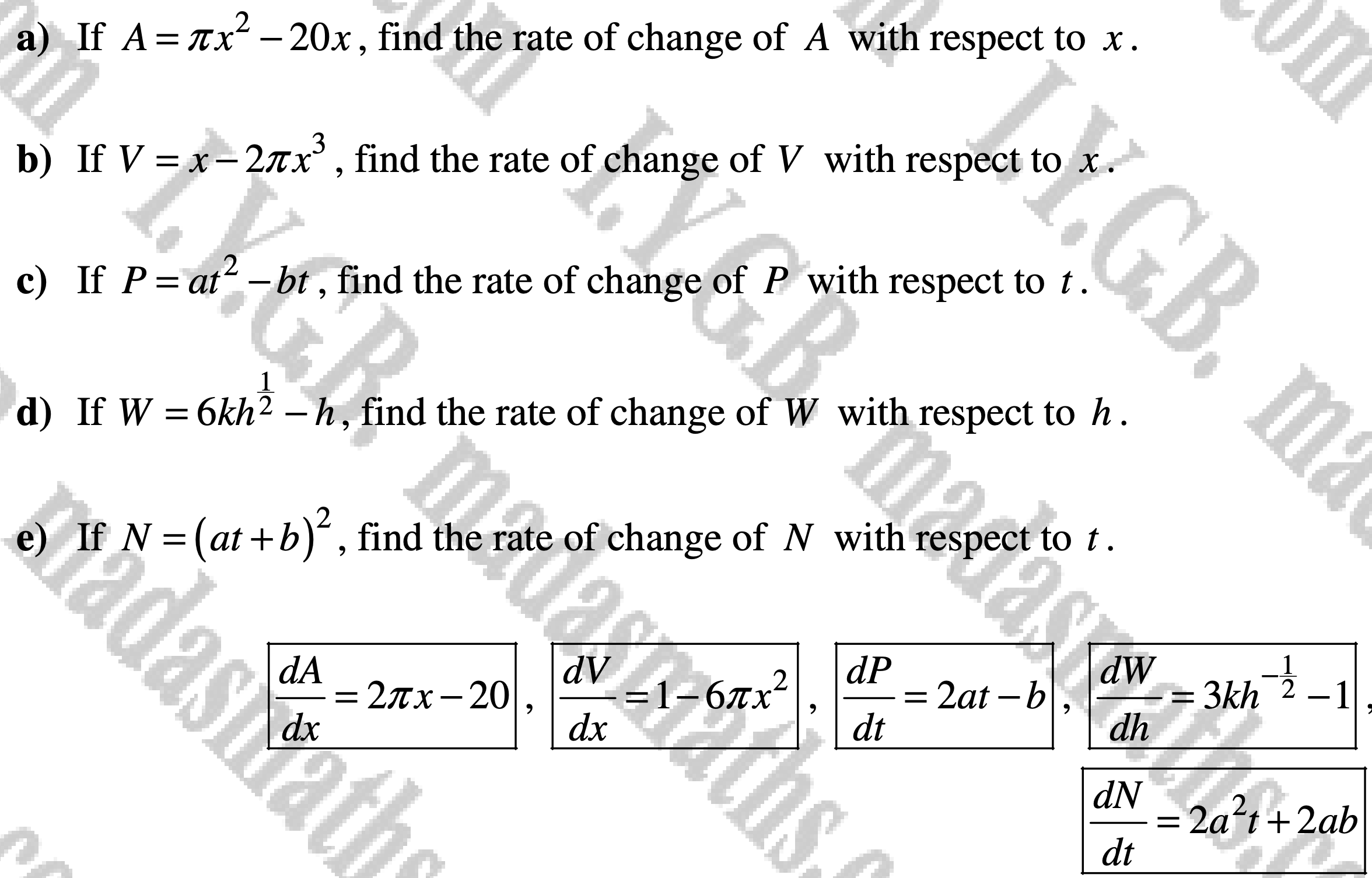
- multiply the coefficient by the power
- subtract one from the power
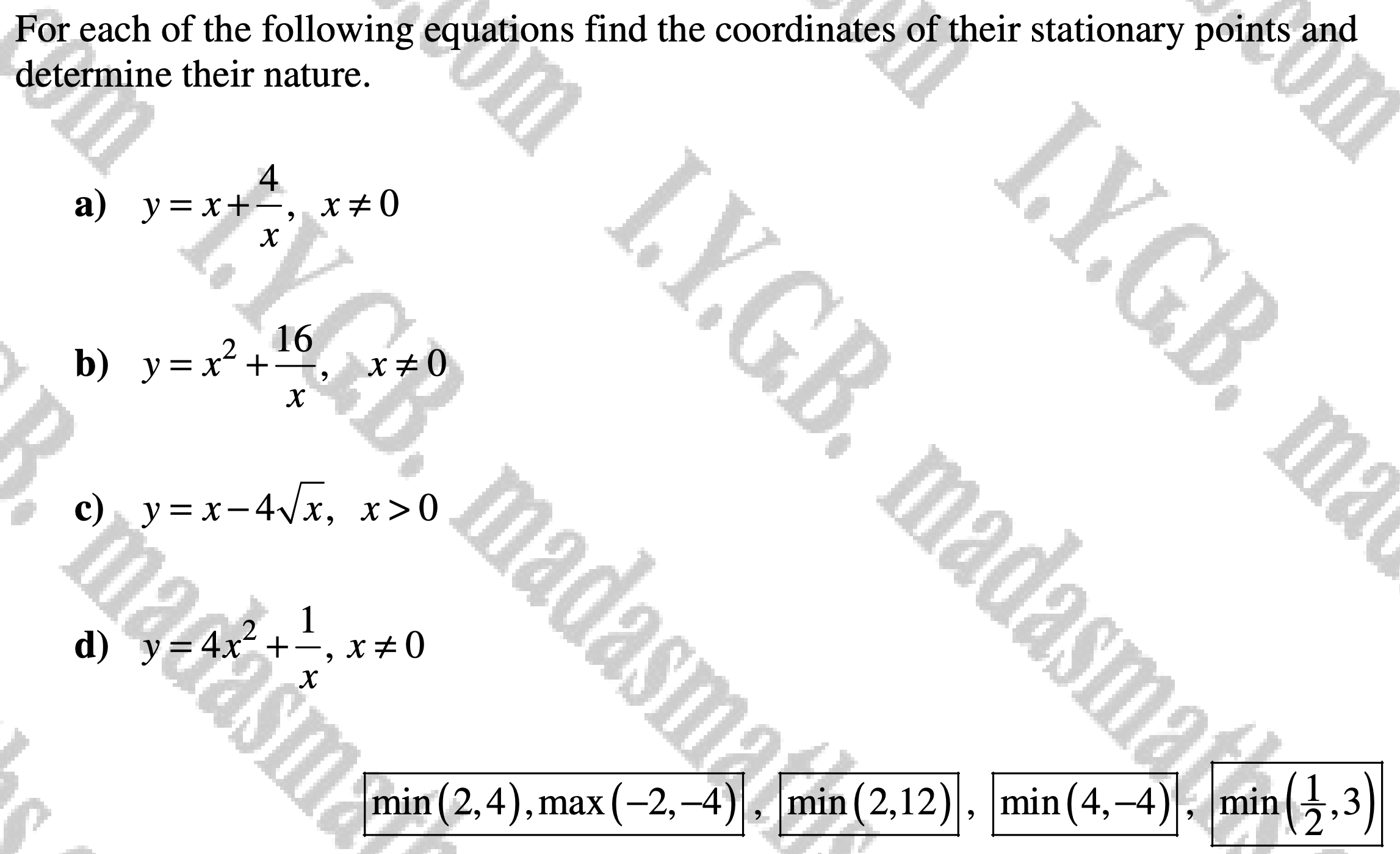
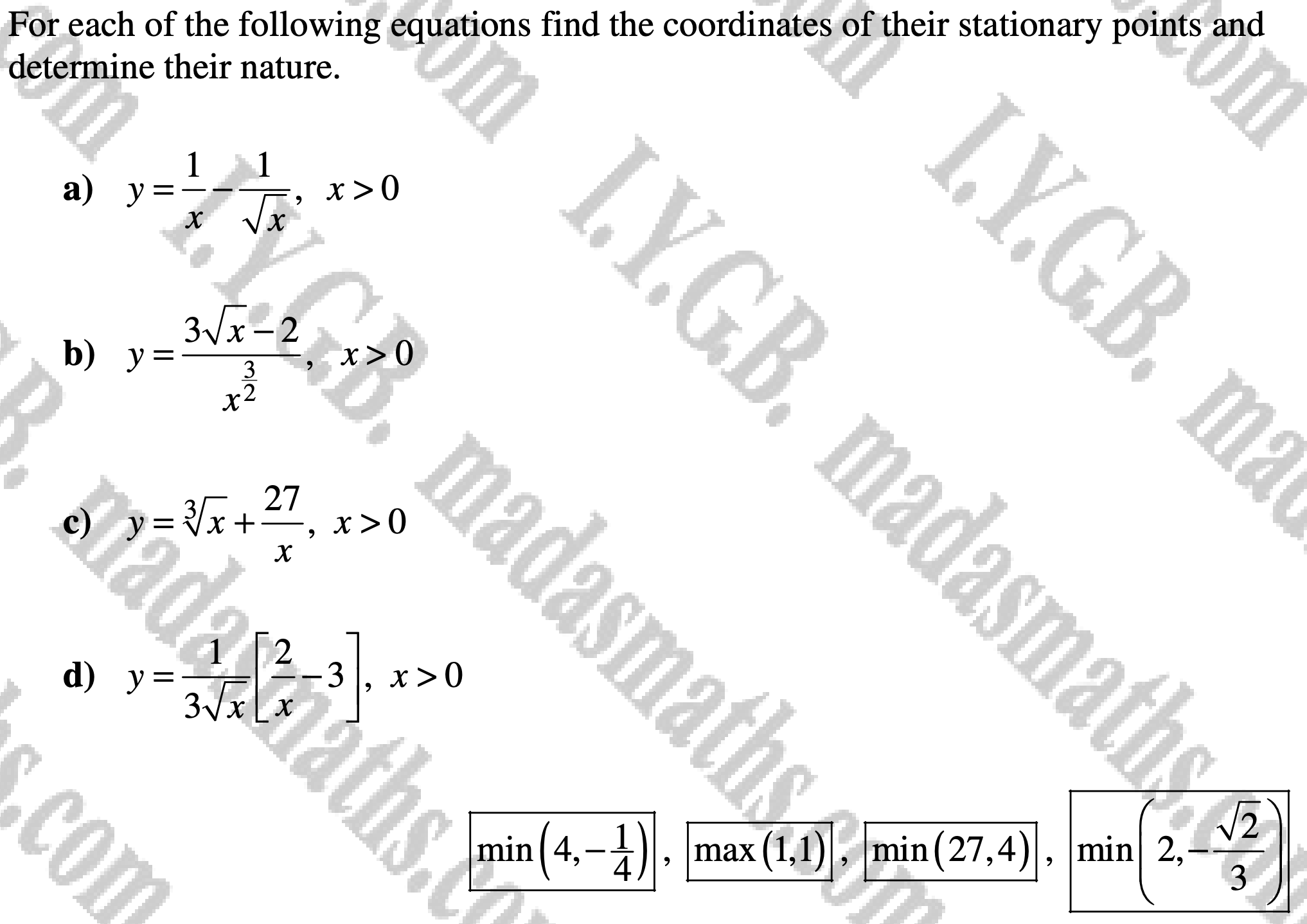
- To work out the x-coordinate of a stationary point
- solve dy/dx = 0 for x
- To work out the y-coordinate of a stationary point
- substitute x into the equation of your curve y = ...
- To work out the nature of a stationary point
- substitute x into d2y/dx2
- If d2y/dx2 < 0 then maximum
- If d2y/dx2 > 0 then minimum
- If d2y/dx2 = 0 then check the gradient on either side
- To work out the gradient at a point on the curve
- substitute x into dy/dx
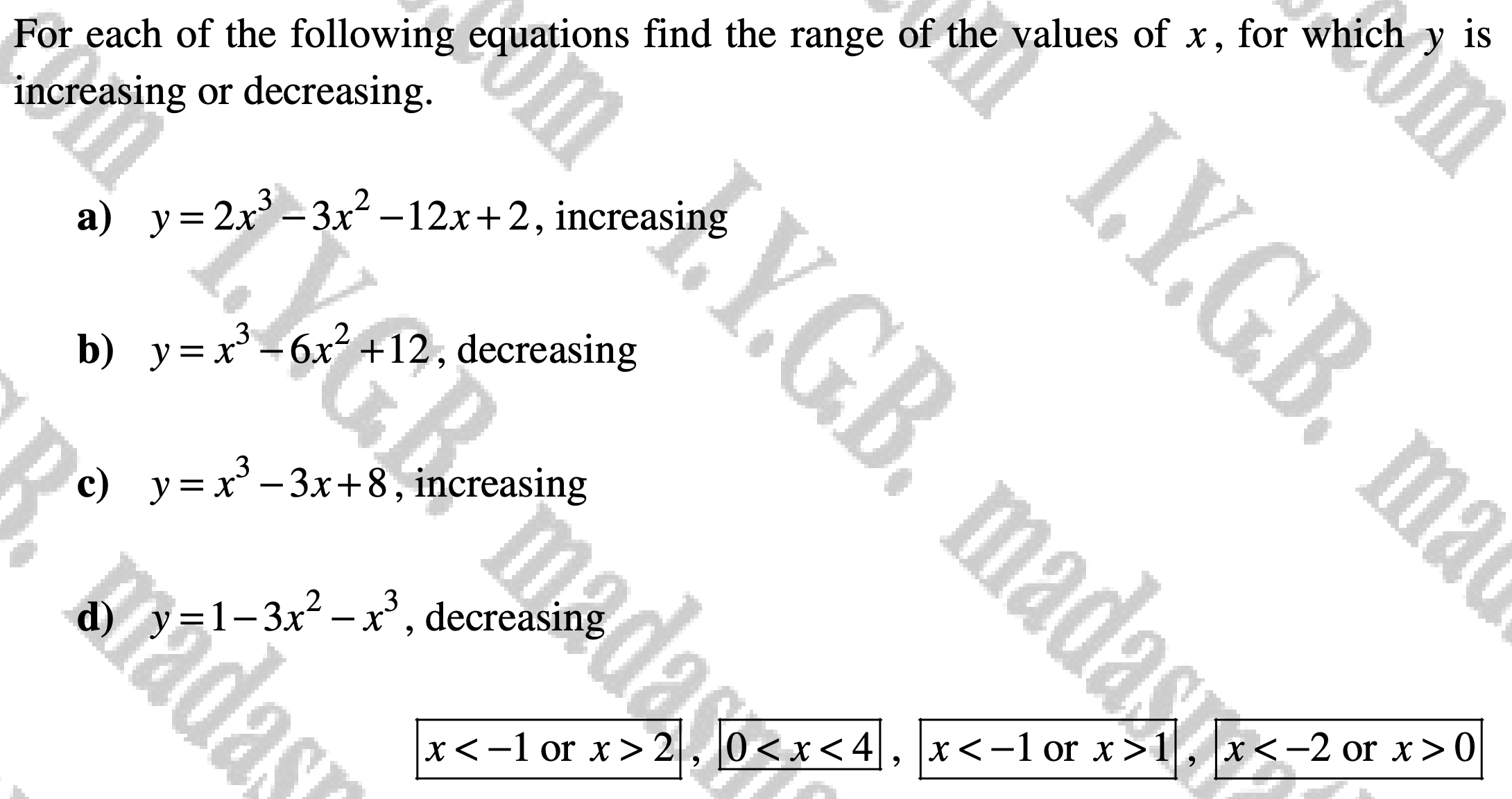
- To work out when a function is increasing
- solve dy/dx > 0
- To work out when a function is decreasing
- solve dy/dx < 0
- To work out the equation of a tangent
- use dy/dx to get the gradient
- use equation of curve to get the y coodinate
- y = mx + c
- To work out the equation of a normal
- use dy/dx to get the gradient
- take the negative reciprocal of the gradient
- use equation of curve to get the y coodinate
- y = mx + c
- Differentiation by first principles
- f'(x) = f(x+h) - f(x)/ h
Question 1
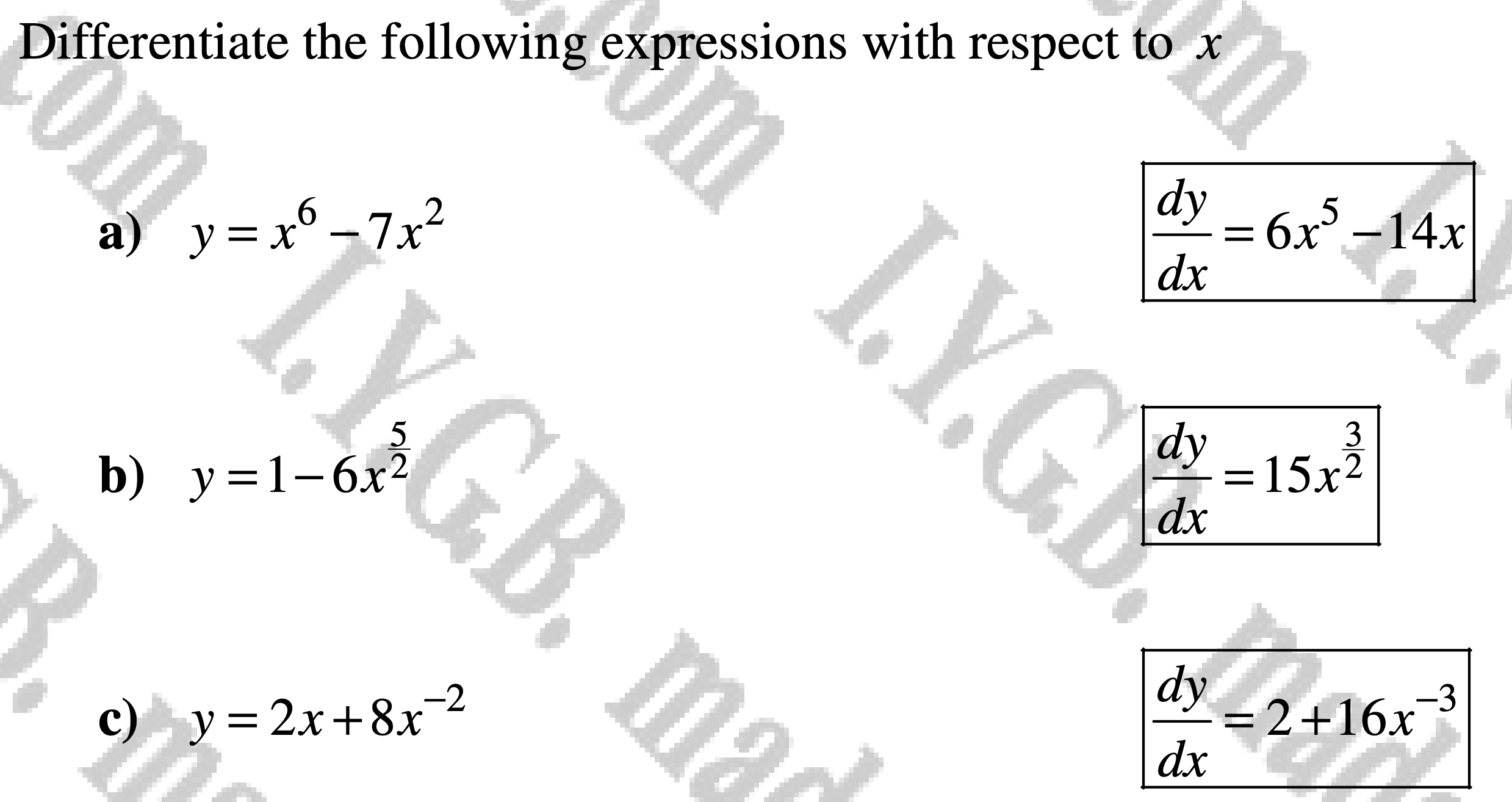
Question 2
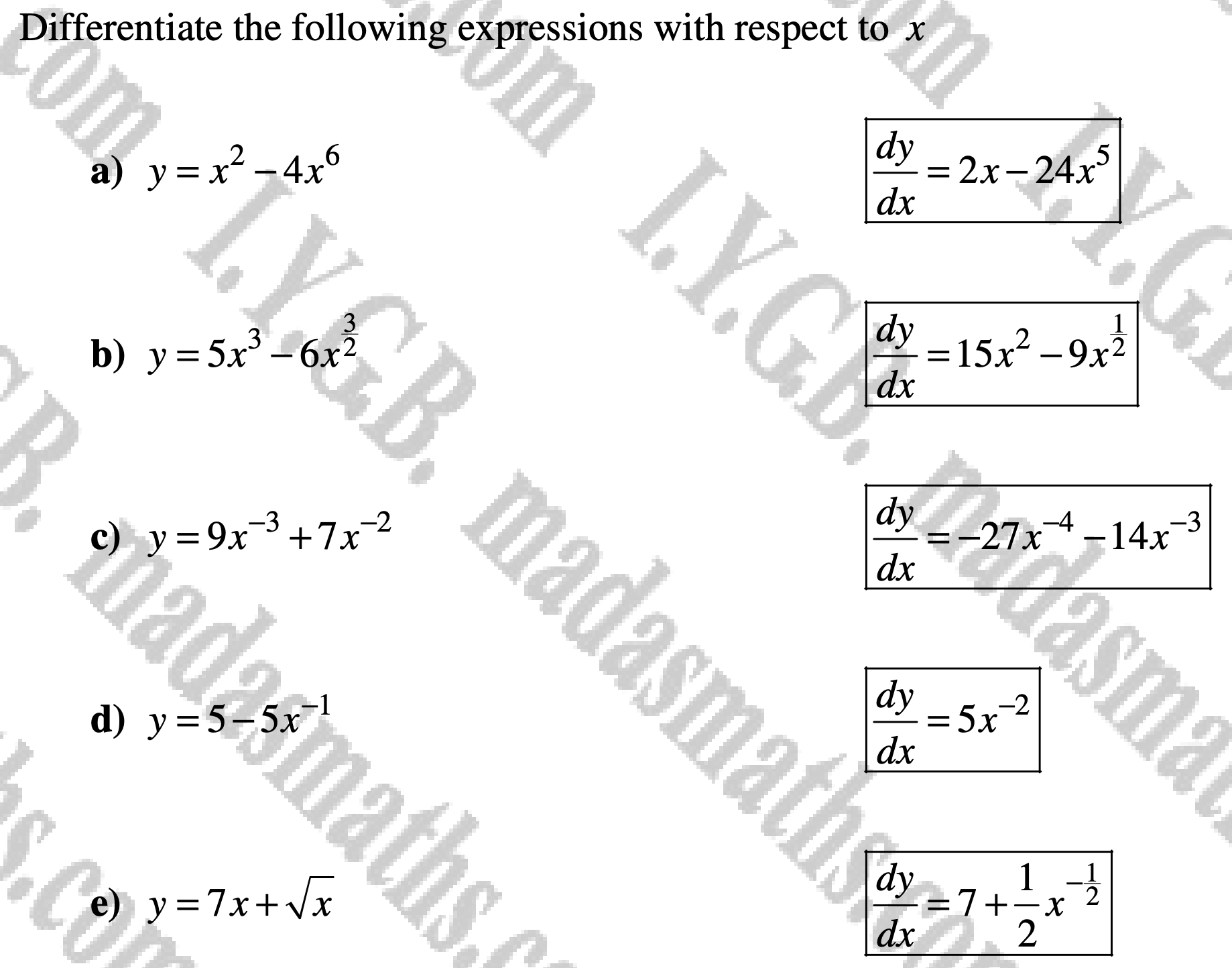
- To work out the x-coordinate of a stationary point
- solve dy/dx = 0 for x
- To work out the y-coordinate of a stationary point
- substitute x into the equation of your curve y = ...
Question 3

Question 4
Question 6
Question 7
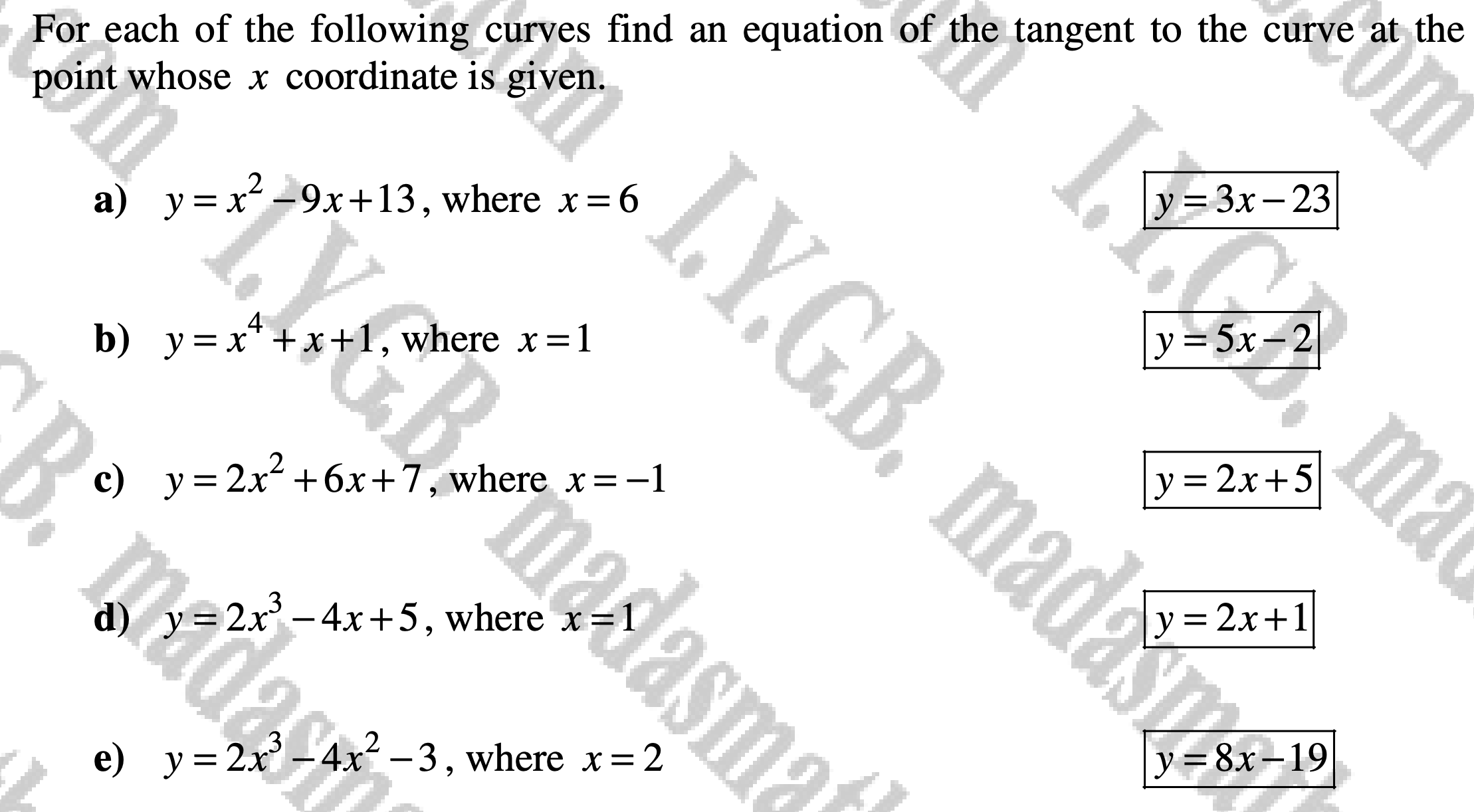
Question 8
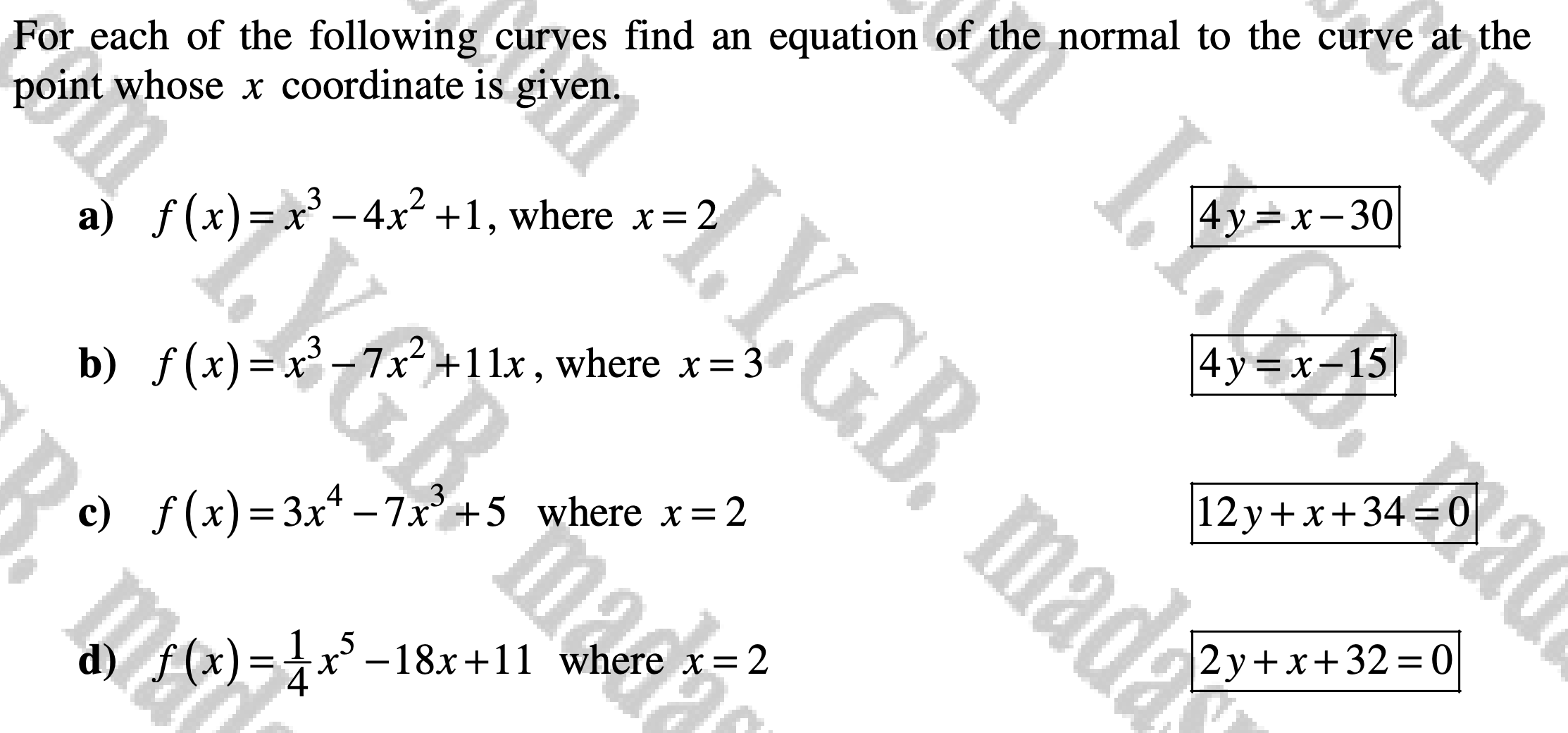
Modelling basics
Question 9
Solving harder equations
Question 10
Differentiation from first principles
Question 11
a) Prove, from first principles, that the derivative of 4x is 4.
b) Prove, from first principles, that the derivative of x³ is 3x².
c) Prove, from first principles, that the derivative of 2x³ is 6x².
d) Prove, from first principles, that the derivative of 5x² is 10x.
e) Prove, from first principles, that the derivative of kx³ is 3kx², where k is a constant.